Ground Stumps Disappear Below Planting Level
Stump Grinding in Loganville for clearing stumps below grade after tree removal
A stump ground 6 to 8 inches below soil line allows grass seed or sod to establish successfully where the tree once stood, and that depth requirement matters specifically in Georgia clay soil where root flares spread wider than you'd expect from the visible trunk diameter. Treedog's Tree Service LLC grinds stumps to proper below-grade depth in Loganville using equipment designed to handle clay conditions, so you're left with a level surface ready for your next landscaping step. The process involves being honest about what grinding accomplishes versus what it doesn't, because stumps get reduced to an acceptable level rather than completely erased like some competitors claim.
Professional grinding means running a carbide-toothed wheel across the stump surface repeatedly, dropping the grinder head incrementally deeper with each pass until the entire stump sits several inches below surrounding grade. Clay soil requires sharp teeth and patience because dull equipment just polishes the wood instead of cutting it, and roots spreading through dense clay take longer to grind than roots in sandy loam. The depth matters because grass roots need several inches of soil to establish.
Schedule grinding after tree removal to prepare the area for lawn restoration or landscaping installation.
What Proper Grinding Depth Accomplishes
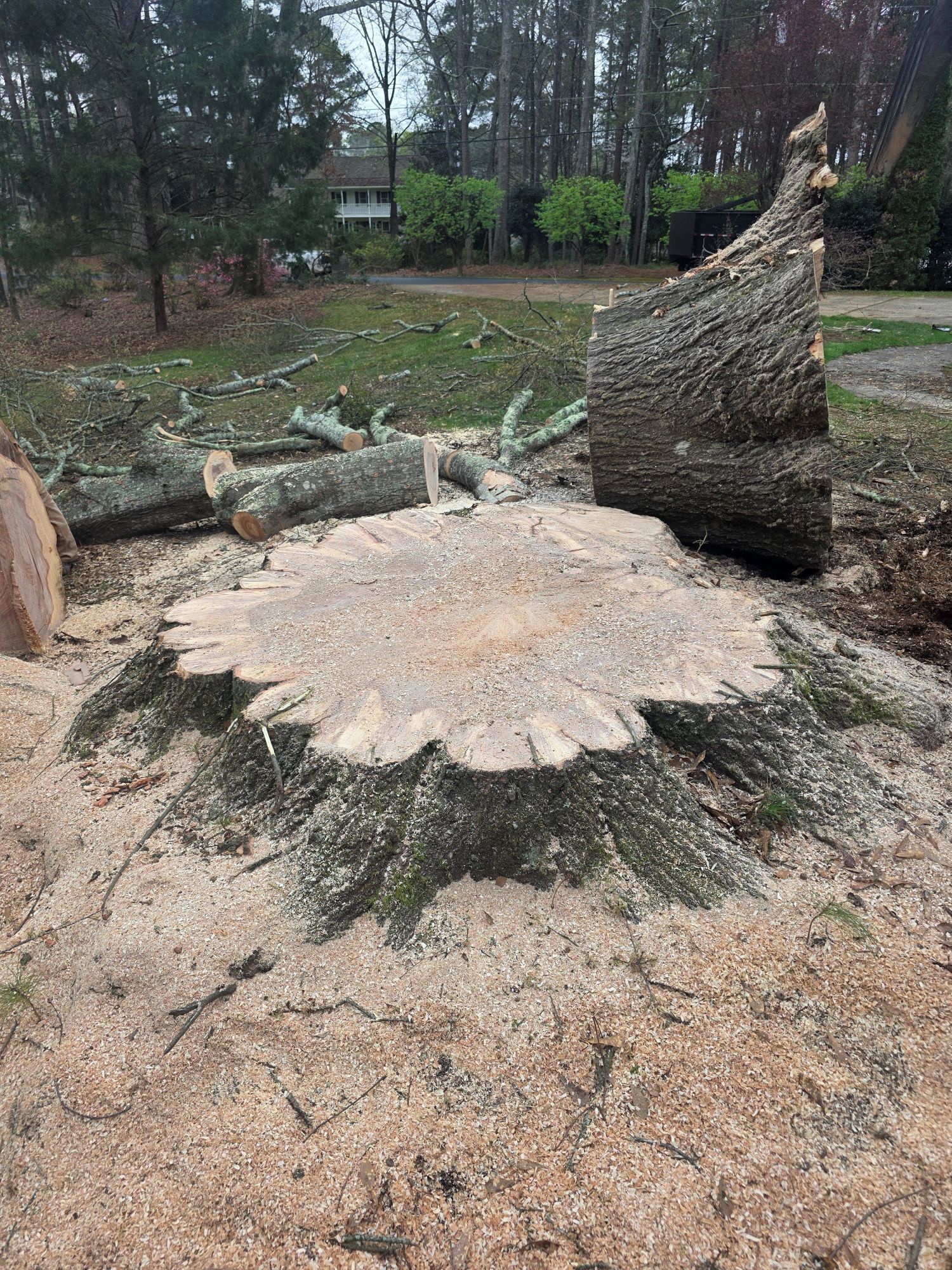
Grinding equipment removes wood tissue by mechanical cutting, reducing the stump and major surface roots. The work creates a depression where the stump stood, which fills with remaining chips and surrounding soil to create a level surface once settled. Below-grade grinding means going deeper than necessary for appearance alone, specifically targeting the depth needed for successful grass establishment or landscape bed preparation based on what you plan for that space.
After grinding finishes and cleanup completes, you'll see level ground where the stump previously sat. The depression naturally settles over several weeks as chips decompose and soil compacts, and you can fill any remaining low spots with topsoil before seeding or sodding. What remains below the grinding depth is residual root structure that decays naturally underground over the following years without affecting surface use.
The service includes grinding visible surface roots around the stump perimeter and complete removal of grinding debris, but it doesn't include filling the depression with topsoil or planting grass in the cleared area. Realistic expectations matter because the root system continues existing below grinding depth, though it no longer affects lawn maintenance or landscaping work above ground.
Common Questions About This Service
Stump grinding raises specific questions about depth requirements and what happens underground after the visible stump disappears.
Why can't stumps be completely removed?
Grinding removes wood above and slightly below grade, but root systems extend many feet underground in all directions, and excavating entire root structures requires digging massive holes that damage surrounding landscape and cost far more than grinding.
How deep does grinding need to go for grass?
Grass roots typically need 4 to 6 inches of soil depth to establish properly, so grinding to that depth below grade allows you to add topsoil and seed or sod successfully without thin spots developing over the former stump location.
Why does clay soil affect grinding work?
Georgia clay dulls grinding teeth faster than sandy soil, and roots embedded in dense clay resist cutting more than roots in loose soil, which means proper equipment maintenance and realistic time estimates matter for completing the job correctly.
Can I plant a new tree in the same spot?
After stump grinding, the area is suitable for grass, flowers, shrubs, and other shallow-rooted plants. Planting a new tree directly over the old stump location is generally not recommended because remaining root material beneath the surface can restrict root growth and affect the health of the new tree.
Treedog's Tree Service LLC provides honest education about grinding depth and realistic outcomes rather than over-promising on stump removal capabilities. Request a site visit to discuss specific grinding needs and cleanup requirements for your property.